Fire does not work out. It exploits indecision, complication, and gaps in preparation. A capable chief fire warden protects against those voids from forming. The task is part technological, part functional leadership, and component human aspects. If you put on the safety helmet and carry the radio, you soak up the duty for relocating individuals to security when secs issue and information is imperfect.
I have actually trained and evaluated wardens throughout offices, warehouses, medical facilities, and education and learning universities. The setups vary, yet the core of the duty stays the very same: recognize your center, lead your group, and make great calls under stress. The following guide distills what a chief fire warden needs to be competent, certain, and certified, with useful detail drawn from real emptyings and drills.
What the role actually means
The chief fire warden is the person in charge of the emergency situation control organisation, collaborating wardens and making higher‑order decisions during an occurrence. In Australian work environments, the duty straightens with the PUA Public Security Training Package, specifically PUAER005 Respond to a center emergency and two devices most companies reference for warden duties:
- PUAER005 and PUAER006 are older codes. The currently utilized units are PUAFER005 Operate as part of an emergency control organisation and PUAFER006 Lead an emergency control organisation. Numerous suppliers still shorthand them as puafer005 and puafer006.
The ordinary day is about readiness: keeping the emergency situation feedback strategy, inspecting tools is serviceable, building a rostered group, and running exercises. The amazing day has to do with command. You size up the scenario, turn on the strategy, delegate jobs, liaise with emergency situation solutions, and make up people. When the alarm silences and the structure is restored, you document, debrief, and repair what did not work.
Competence begins with standards
If your training and treatments do not mirror acknowledged requirements, your team will improvisate under tension. That seldom ends well.
Most Australian work environments make use of AS 3745 Preparation for emergency situations in centers to direct their emergency situation planning and the structure of an emergency situation control organisation. The two core proficiency units lug the majority of the functional skills:
- PUAFER005 run as component of an emergency situation control organisation: This is the baseline fire warden training for wardens responsible for flooring sweeps, alarm response, and standard sychronisation. Subjects include building familiarisation, alarm system types, communication protocols, brushed up searches, aiding mobility‑impaired owners, and safe use of very first strike tools where trained and appropriate. PUAFER006 lead an emergency control organisation: This is the chief warden course that prepares you to route various other wardens. It covers risk analysis, establishing top priorities, command and control, escalating or scaling down feedbacks, sychronisation with emergency situation solutions, and post‑incident management.
Training language varies amongst companies, yet if you are scheduling a fire warden course or chief warden course, check that the units straighten with PUAFER005 and PUAFER006. If you see puafer005 course or puafer006 course provided, verify currency and analysis techniques. Proficiency without analysis is simply knowledge, and knowledge fades.
Confidence comes from reps that count
I have enjoyed groups run 4 evac drills a year and still stumble when a real smoke alarm activates at 6:15 pm, half the building gone, the rest distracted. The distinction is practice session with restrictions. You can not imitate smoke, warmth, and chaos in every drill, yet you can form drills to force decision production:
- Vary the time. Go for shift modification, very first point in the morning, and throughout peak client hours. The chief warden must learn the pace of the structure at different times, and the emergency warden group have to adjust where individuals congregate. Vary the scenario. Drill a straightforward alarm one quarter, a partial evacuation the next, a complete emptying with a blocked egress afterwards, then a shelter‑in‑place scenario as a result of external hazard. Vary the information. On one drill, reveal clear directions. On an additional, imitate a comms failing and call for use runners.
This does not indicate chaos for its very own purpose. It suggests constructing self-confidence that the team can do without a manuscript, which is precisely the muscle genuine emergency situations demand.
Compliance is a flooring, not a ceiling
Fire warden needs in the work environment rest at the crossway of legislation, requirements, and business policy. The legislation needs risk-free systems of work. Criteria such as AS 3745 define planning and roles. Your insurance firm and security administration system may add responsibilities like regularity of emergency warden training, evidence of proficiency, and proof of exercises.
Where work environments stumble is dealing with compliance as the end state. If your center has complicated dangers, the standard will not suffice. A medical facility with oxygen lines, a chemical storage facility, or a multi‑tenanted high‑rise requirements extra layers: more constant drills, specialist instructions, and joint exercises with emergency services. A little workplace may be well offered by typical fire warden training. A distribution center with 24‑hour operations and seasonal spikes needs shift protection, evening procedures, and regular refresher course training customized for brand-new casual staff.
The colours and what they mean
Colours are not vanity. They are quick aesthetic cues that cut through noise. In most Australian contexts:
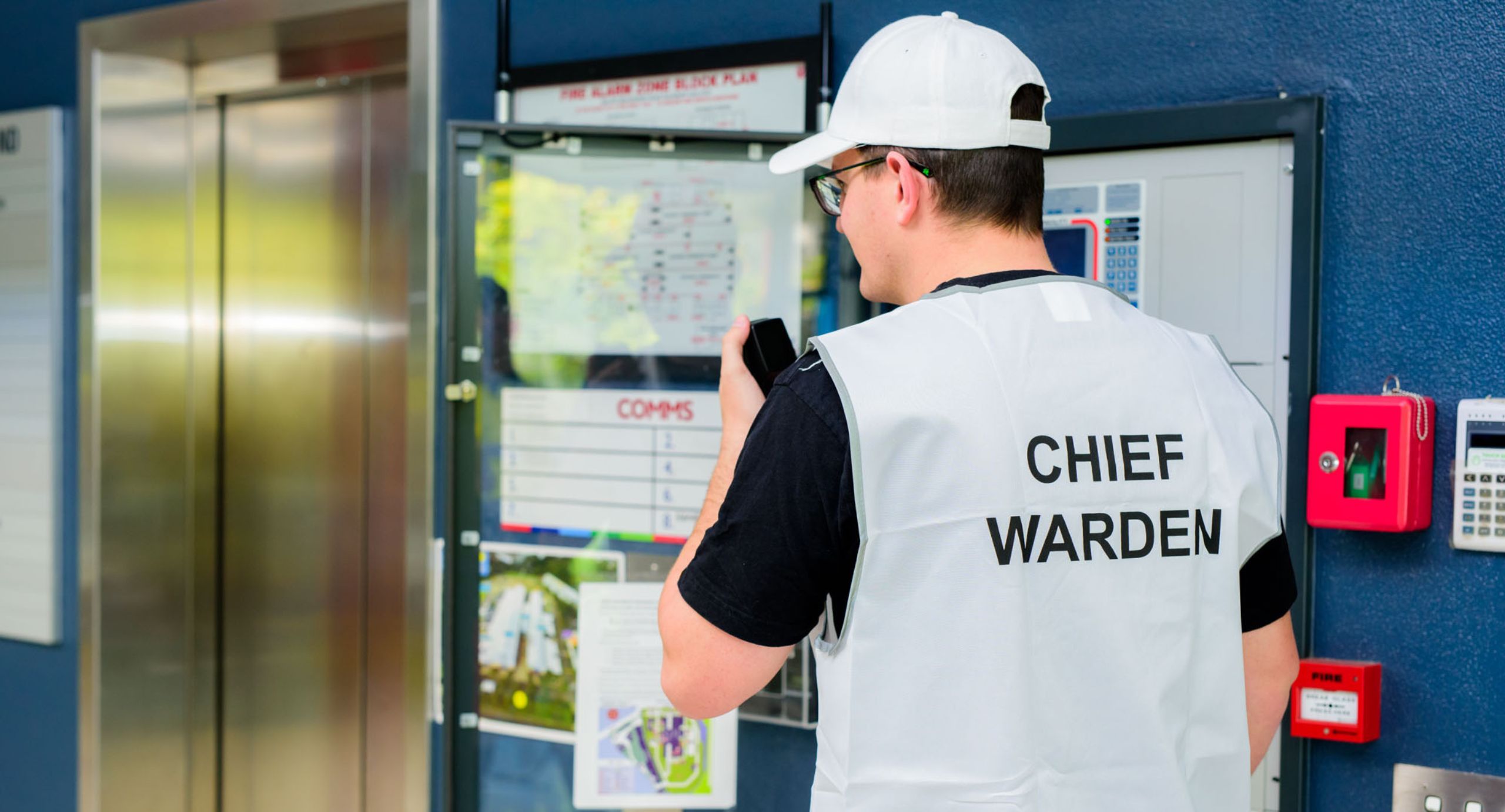
- The chief warden uses a white helmet or white warden hat, usually marked with "Chief Warden" front and back. For those asking what colour helmet does a chief warden wear, the referral response is white. Deputy chief wardens generally wear white as well, marked "Replacement." Floor or location wardens generally wear yellow safety helmets or high‑visibility caps marked "Warden." If your office makes use of hats rather than helmets, keep regular markings across shifts.
When individuals inquire about fire warden hat colour, what issues is uniformity and visibility. I have actually seen workplaces make use of caps because safety helmets really did not fit well with headsets or construction hats in combined environments. That can function if the presence at a range is comparable and the labels are unambiguous. The chief warden hat ought to be visible at a glimpse against the environment, whether that is an office flooring or a dark storeroom.
The chief fire warden's job under pressure
When the alarm sounds, the first minute is crucial. Because min, you should develop control, verify the nature of the alarm system, and give the initial clear direction. The error I see usually is delay triggered by unclear triage. People await best information while the structure maintains full of individuals uncertain where to go.
A good pattern: move fast to your control factor, confirm panel information or regional records, appoint wardens to confirm if secure, and make the initial phone call to evacuate the affected zone or the entire structure based on your strategy. If your strategy calls for dynamic emptying, implement it decisively. If smoke or unusual heat is reported, don't overthink it, evacuate.
Expectational leadership matters. Use a tranquil voice on the or radio. Brief sentences, one guideline per transmission, and a clear endpoint. Individuals will mirror your cadence.
Chief warden duties, day to day
A chief emergency warden makes their reputation between cases. The regular collections the response pace when it counts. A number of responsibilities belong on your month-to-month cycle:
- Review the emergency situation action plan for currency. Flooring layouts transform, lessee numbers shift, specialists come and go. Out-of-date layouts and contact checklists erode action speed. Check your lineup. Do you have educated wardens on every degree, throughout every change and specialty area? You require redundancy. Team leave, go on vacations, or transform duties. A gap on degree 6 often tends to show up at the worst possible moment. Inspect devices that sustains wardens: warden hats or headgears, vests, lanterns, whistles, and radios. Batteries die, labels peel off, and equipment walks. Coordinate training. New wardens finish a warden course to PUAFER005. Prospective principals complete PUAFER006 lead an emergency control organisation. Refreshers every 2 years keep skills existing. If roles transform or the building alters, run targeted briefings sooner. Schedule and critique drills. Go for a minimum of 2 emptying works out a year, with one unannounced. Preferably, obtain the structure's center supervisor and tenant representatives involved to settle cross‑functional issues.
Fire warden training requirements, with nuance
A fire warden course ought to be more than a slide deck and a certificate. High‑quality warden training mixes theory, walk‑throughs, and circumstance method:
- Theory: alarm system phases, building fire systems, smoke characteristics, interactions protocol, the hierarchy within the emergency control organisation. Walk through: evacuation routes, different egress, assembly locations, fire indication panel location, hydrant/hose reel/isolation factors where appropriate, and the tricky places like keypad doors or products lifts. Scenario technique: role‑play with radios, timed sweeps, managing an individual that refuses to leave, aiding someone with flexibility or sensory disability, and a curveball like a blocked stairwell.
For the chief warden training lined up to PUAFER006, evaluation should consist of choice making under stress, taking care of insufficient details, and working with numerous wardens with conflicting records. Paper‑based exercises can not fully duplicate the haze of a genuine alarm system, but they can grow behaviors that keep in the moment.
Edge instances that divide the educated from the prepared
Across facilities, the exact same edge cases recur. If you lead an emergency situation control organisation, construct solution to these in your strategy and training:
- People that will certainly not evacuate. Wellness problems, target dates, or uncertainty lead some to resist. Wardens must use firm, considerate language, record refusals, and intensify to the chief warden. The chief makes a decision whether to designate another attempt or document and move, based on danger at the time. Persons with impairment or injury. Pre‑planning matters. Preserve a mobility support register with authorization, with chosen pals for emptying support. For high‑rise structures, consider discharge chairs and educate a part of wardens to utilize them. During drills, practice accompanying to a safe refuge if complete stairway descent is not practical in a training context, and record the plan for real incidents. After hours occupancy. A building that feels hectic at lunchtime turns into a labyrinth at night. Cleaners on various floorings, a handful of designers in a lab, specialists in the plant space. The chief warden requires an approach to account for people when sign‑in systems are irregular. Radio get in touch with security patrols and a sweep of well-known hot spots can make the difference. Mixed occurrences. Fire alarm plus clinical emergency situation, or emergency alarm during a power interruption, makes complex choices. The default stays life safety and security via evacuation, however the principal has to assign a warden to shepherd the clinical instance while others proceed moves. If elevators are stuck, dispatch wardens to staircase doors on damaged levels for welfare checks. Smoke but no heat. Scorched salute is a cliché till a smoke detector near a kitchenette causes a full‑floor evacuation. If your building allows alert and emptying stages, define in advance when to rise. Never embarassment a false alarm. Debrief, then readjust. As an example, changing a toaster or adding neighborhood exhaust can lower hassle triggers.
Radios, language, and cadence
Communication is not just words. It is brevity, clarity, and tone. In drills, I instructor wardens to utilize ordinary language and to report just what the principal needs to determine. A common failing mode is rambling descriptions without a clear ask.
Here is a basic design template that services most sites:
- Identify on your own and area: "Level 8 Warden at the north stairway." State the truth succinctly: "Noticeable light smoke in the kitchen space, no flames seen." State the action or demand: "Leaving east wing to stairwell, requesting maintenance isolate toaster oven circuit."
The principal replies with a brief verification and any kind of choice: "Duplicate Level 8, proceed with emptying of Degree 8 east wing, all various other levels continue to be on sharp, upkeep en course."
If your site uses code phrases, use them constantly, but prevent lingo that confuses brand-new staff or visitors. Your news ought to be even less complex, one guideline each time, such as "Attention all passengers on Degrees 7 to 10, evacuate using the staircases. Do not make use of lifts."
Documentation: the spine of constant improvement
Paperwork seldom thrills any individual, yet it develops the spinal column of a defensible, improvable system. As chief warden, preserve:
- Current duplicates of the emergency situation action plan, diagrams, and get in touch with lists. Training records for each warden, including PUAFER005 and PUAFER006 currency, and any type of specialized training like discharge chair use. Drill records with times, participation numbers, concerns determined, corrective actions, and deadlines. Incident logs for real activations, consisting of timeline, decisions made, and results. These logs, removed of personal details, become your study for the next training session.
Insurance assessors, regulatory authorities, and senior administration all react well to proof. Much more importantly, you will certainly detect patterns you can fix, like the exact same hinged fire door that falls short to latch or the exact same team neglecting to collect the visitor sign‑in sheet throughout sweeps.
Selecting and maintaining the team
Not every person must be a warden. The most effective fire wardens are constant under stress, have sufficient existence to relocate a crowd, and respect information without being nit-picking. In the real world, you will mix skilled staff with eager newcomers. The chief warden's work is to form them right into a team.
Mentoring helps. Match new wardens with experts for the first 2 drills. Revolve projects so every person finds out various floors or areas. Recognition issues too. A fast thank‑you on the company network after a tidy drill goes a long means to preserving volunteers, particularly in high‑turnover environments.
For large or complex websites, produce replacement duties to lug the lots. A replacement chief warden that manages training routines or equipment audits releases the principal to focus on planning and high‑risk situations. The bigger the site, the a lot more you gain from a recorded sequence strategy so the operation does not rest on one person's availability.
The lawful and ethical dimension
Beyond lists, the chief fire warden lugs an ethical duty of treatment. You ask individuals to leave workdesks, laboratories, operating theatres, or forklifts and comply with guidelines versus their prompt rate of interests. They offer you trust fund. Gaining it implies you do your research, train seriously, and interact openly.
On the lawful side, companies owe workers a secure work environment and reliable emergency procedures. If an incident creates harm and a regulatory authority asks how you prepared, "we implied to schedule training" is not a defense. Many territories anticipate routine emergency warden training, evidence of drills, and a strategy customized to the actual threats of the center. If your structure hosts unsafe chemicals, high‑rise egress, or vulnerable populaces, your strategy must show that reality. This is where engaging with a proficient fire safety specialist pays back, specifically when equating standards into site‑specific procedures.
The right use of very first assault firefighting equipment
Some wardens assume carrying an extinguisher belongs to the function. It can be, if educated and if problems allow. The pecking order stays fixed: life safety and security initially, then residential property. A chief warden must set clear guidelines on when to attempt to extinguish a tiny fire:
- The fire is little and included, you have a safe exit at your back, the proper extinguisher type is at hand, and you are trained. If those conditions do not line up, take out and continue evacuation.
During debriefs, reward profundity to take out. Heroics create tales but frequently finish with smoke breathing or obstructed egress. Your team's self-control to prioritise discharge is a success metric.
Working with emergency services
When firefighters arrive, they take command of the event. Your work shifts to intel and support. An excellent handover consists of alarm area info, observed smoke or fire locations, any type of dangerous materials, the standing of discharge, and anybody unaccounted for. If your website has a fire control area, ensure accessibility is clear and the panel is useful. If you have a website plan showing hydrants, hydrant boosters, and shut‑offs, maintain it existing and accessible.
I suggest inviting local firefighters to a site familiarisation yearly. A 30‑minute tour conserves mins when mins issue, especially in complex sites like multi‑tenant facilities or plants with unknown access routes.
The human side of the aftermath
After the all‑clear, the chief warden encounters a various obstacle: stabilizing the urge to reset and return to work with the requirement to reflect and find out. People will desire responses. Provide what you can, stay clear of speculation, and dedicate to sharing lessons discovered when realities are confirmed. After that follow through. A quick note that explains what triggered the alarm system, what functioned, and what will change builds depend on and maintains the security culture alive.
During one winter in a mixed office and lab building, we had 3 alarm systems in 6 weeks, two from a damaged air‑handling device and one from a lab procedure mistake. Aggravation rose quickly. The chief warden's stable communication, incorporated with chief fire warden visible upkeep job and an adjusted laboratory procedure, calmed the noise. Basically, openness beats silence.
Matching training to your context
Providers promote emergency warden course, fire warden course, and chief warden course choices almost everywhere. The certifications look the same theoretically, yet material and delivery high quality differ. When selecting training:
- Ask for site‑specific situations. If you run a retail flooring with thousands of customers, exercise public address scripts and crowd control. If you take care of a data center, consist of controlled shutdown liaison. Confirm analysis is sensible. Watch out for courses that guarantee "fast online" certifications with no drills. Concept alone does not build muscular tissue memory. Clarify the refresh cycle. The majority of offices embrace two‑year refresher courses for wardens and principals. If you have high turnover or complicated modifications, consider yearly refreshers or shorter in‑house refresh briefings between formal recertifications.
If your labor force includes people for whom English is a second language, request instructors who can change rate, usage easy language, and anchor with visuals. Clearness defeats lingo every time.
A simple pre‑incident preparedness check
To maintain readiness real, here is a compact check you can run monthly. If you can not state yes to each factor, schedule actions.
- Do we have actually sufficient trained wardens, throughout all floorings and changes, to cover absences? Are emergency representations exact after any fit‑outs or layout changes? Are radios, warden hats, vests, and lanterns represented and working? Are movement support intends present and recognized to the team? Have we scheduled the following drill and oriented floor managers on their role?
Confidence is teachable
I have actually seen quiet experts end up being exceptional chief wardens. Not because they like a crowd, however since they prepare well, talk plainly, and stay with the strategy. Confidence grows from 3 resources: knowing your structure better than anyone, exercising decisions prior to you require them, and bordering on your own with a trained team you trust.
If you are entering the function, begin with PUAFER006 lead an emergency control organisation and freshen your structure with PUAFER005 operate as part of an emergency control organisation. Establish a schedule for drills, assemble your group, and stroll the courses. Ask maintenance to reveal you the panel and the plant. Meet safety. Invite regional firemans for a walk‑through. After that, build routines: short clear radio telephone calls, crucial initial actions, and devoted documentation.
Everything else flows from that. When the alarm system sounds, your prep work gets tranquil. Calm purchases time. Time buys security. Visit this link And that is the job.
Quick response to common questions
What colour headgear does a chief warden put on? White. The chief fire warden hat colour is white, typically marked "Chief Warden." Deputy chiefs use white marked "Deputy," and basic wardens utilize yellow.
How commonly should we run drills? Two per year is a common minimum for workplaces, yet adjust to take the chance of. For facility facilities or high‑rise buildings, quarterly drills or targeted exercises for high‑risk areas are sensible.

Do wardens have to utilize extinguishers? Only if trained, the fire is small and contained, and they have a risk-free leave. Discharge takes priority.
What is the distinction in between warden training and chief warden training? PUAFER005 focuses on operating as part of the team, carrying out sweeps, and interaction. PUAFER006 concentrates on leadership, choices under stress, and coordination of resources.
Are hats needed, or can we make use of vests? Use what is most visible and practical on your website. Hats or headgears with clear tags assist, however high‑vis vests with "Chief Warden" or "Warden" in huge print can work if continually used and promptly recognisable.
Final thought
Competence, confidence, and compliance are not completing goals. They enhance each various other. Train to the standard, drill beyond the minimum, and lead with clarity. Whether you monitor a quiet office or an active storehouse, the fundamentals hold. A well‑prepared chief fire warden turns a noisy minute into an orderly activity towards safety.
Take your leadership in workplace safety to the next level with the nationally recognised PUAFER006 Chief Warden Training. Designed for Chief and Deputy Fire Wardens, this face-to-face 3-hour course teaches critical skills: coordinating evacuations, leading a warden team, making decisions under pressure, and liaising with emergency services. Course cost is generally AUD $130 per person for public sessions. Held in multiple locations including Brisbane CBD (Queen Street), North Hobart, Adelaide, and more across Queensland such as Gold Coast, Sunshine Coast, Toowoomba, Cairns, Ipswich, Logan, Chermside, etc.
If you’ve been appointed as a Chief or Deputy Fire Warden at your workplace, the PUAFER006 – Chief Warden Training is designed to give you the confidence and skills to take charge when it matters most. This nationally accredited course goes beyond the basics of emergency response, teaching you how to coordinate evacuations, lead and direct your warden team, make quick decisions under pressure, and effectively communicate with emergency services. Delivered face-to-face in just 3 hours, the training is practical, engaging, and focused on real-world workplace scenarios. You’ll walk away knowing exactly what to do when an emergency unfolds—and you’ll receive your certificate the same day you complete the course. With training available across Australia—including Brisbane CBD (Queen Street), North Hobart, Adelaide, Gold Coast, Sunshine Coast, Toowoomba, Cairns, Ipswich, Logan, Chermside and more—it’s easy to find a location near you. At just $130 per person, this course is an affordable way to make sure your workplace is compliant with safety requirements while also giving you peace of mind that you can step up and lead when it counts.